If you are chronically online as I am, you would have come across the A16Z-proposed American Dynamism themes that seem to have caught fire.
Hating on ZIRP-era startups
I am not the biggest fan of the excessive amount of ZIRP-era talent and capital that was deployed in shady crypto, NFTs and metaverse startups that virtually ended up nowhere. I recall being part of the crypto circle where young boys and girls would just essentially fly to these crypto conferences in Denver and Paris on what seemed like VC-funded money. It did not sit well with me.
I, like many others, aspire to wealth. However, I would much prefer this wealth to come from solving a really challenging problem. Otherwise, I could have just been a rent-seeking landlord, which remains my backup plan (Deeper thoughts on the rentier economy some other day!)
What led to this theme emerging?
Consumer applications remain an incredibly hard category to build for. However, when we are surrounded by so many challenges in the physical world and unable to fund solutions for them, I am inclined to think that we prioritize the wrong problems. The end of the ZIRP era has been a great reckoning for capital discipline across the entire startup and VC ecosystem. Many VC-backed startups went bust. There was also a reckoning that China is catching up in pace with the Western Hemisphere on innovating across the latest verticals and Americans are facing a deep desire to compete. We saw this with the Biden administration's CHIP Act and now with the Trump administration's more aggressive posturing in and around the world.
Maybe A16Z just gave a name to a set of themes that were already happening in the American economy, especially in the wake of the Russian invasion of Ukraine.
Realities of doing hard tech
I am also curious if hard tech/deep tech startups are keen to generate the same kind of returns as the ones that VCs are used to, and are addicted to from the ZIRP era. Saronic builds submersible vehicles (I watched the interview and was super impressed by the founder!)
Surprisingly, what the private sector actually has to deploy its capital to re-industrialize America seems to be a uniquely American problem. Despite a long history of the American public sector charting some of the biggest innovations that ever came out, eventually leading to the formation of Silicon Valley, the American public still frowns upon the use of public sector dollars to fund innovation. Contrast that with China, whose state-led model of capitalism has spurred some of the most inspiring innovation along the value add chain.
As the battle lines get drawn in the sand, VC firms like Sequoia have divested their fund holdings for places like China and India to refocus on AI at home.
Here in Canada
With successes like Tesla and SpaceX, there is now an established playbook. Names that would have never missed me are now being funded. Ulysses is building solutions for ocean tech. Names like Anduril and Hadrian are talent-dense giants. The reinvigoration of the American Dynamism theme seems to have caught fire north of the border, with our own Canadian Dominion Dynamics raising a seed round. People are aspiring for more and building towards it.
Where do we have more to learn?
With Chinese manufacturing making the news, I am also very interested in understanding the knowledge transfer process that allowed the Chinese to learn and acquire knowledge from the Americans, which eventually led them to win in markets for solar panels and EVs. God knows what's next? I am also interested in knowing that if the American vaccine sites its partners away from China, how would the same knowledge transfer process look like in other economies like India and the Gulf countries looking to play a role in the global value-added chains.
We are also increasingly hearing news of massive infrastructure upgrades around the world. Pakistan, of all places, now has 25% of its grid powered by solar panels. India is rapidly expanding its infrastructure and port networks. We are looking at a world where more markets are connected to each other, and better infrastructure built here in North America means a better market for us elsewhere abroad and a continuation of the international liberal order that has generated massive prosperity for a majority of the world's population.
How does this influence my own trajectory?
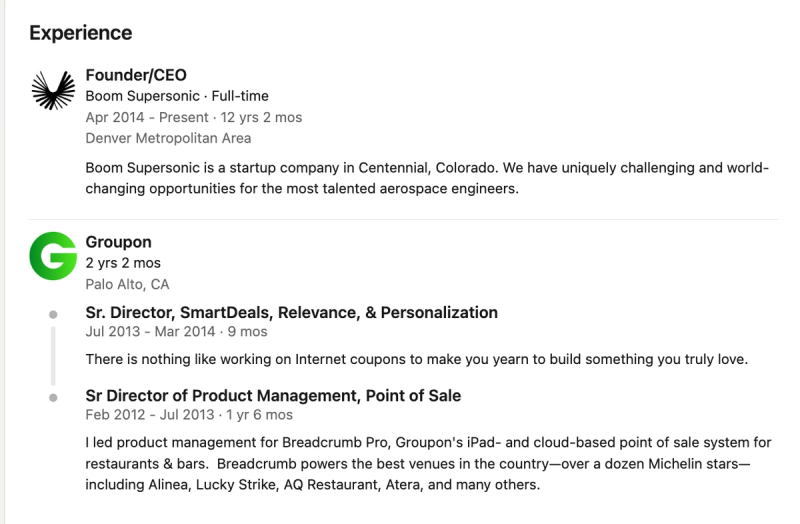
At some stage of my career, I would try to pull off what the founder of Boom did — quitting the product manager career track to raise some funding and try to revive the launch of the supersonic aircraft, given the demise of the Concorde. (Would I need to get back to school for graduate-level mathematics or physics? I am not sure?)
Reading material in hardtech/defensetech
- Shyam Sankar’s First Breakfast Substack
- The Anduril Thesis by Contrary